Tools
How to use the reconstitution calculator correctly
Mar 19, 2026

This companion explains how to enter calculator values correctly, audit unit conversions, and verify outputs with a second-pass check before any decision.
Why this tool guide matters
The reconstitution calculator helps reduce arithmetic mistakes. It does not validate context, safety, or protocol suitability. That distinction is important. Many errors happen when people trust a clean output without validating the inputs that created it.
This guide explains a practical workflow you can repeat in less than two minutes. The goal is simple. Reduce unit mistakes, prevent concentration confusion, and keep a written trail of what was entered and why.
What the calculator actually computes
The calculator converts vial amount and diluent volume into concentration, then translates a target dose into syringe units or volume. It is a math engine. If one input is wrong, the output can still look precise while being directionally wrong.
Use it as an arithmetic aid, not as a decision engine. Decision quality still depends on evidence quality, baseline context, and risk framing from your broader review process.
Input fields that determine output quality
Three inputs carry most of the risk.
Vial amount and units. Confirm whether label amount is in milligrams or micrograms.
Final diluent volume. Confirm the amount added, not the syringe size used to add it.
Target dose and units. Confirm that the target is written in the same unit family expected by the calculator.
Small unit mismatches create large downstream errors. A mg versus mcg mistake can produce a thousand fold mismatch.
Four step input audit before you calculate
Step one read the vial label out loud and write it down exactly.
Step two write the intended final volume after reconstitution.
Step three write target dose in both mg and mcg forms for cross check.
Step four verify syringe scale assumptions before accepting output.
This short process catches most high impact mistakes before they propagate.
Common error patterns we see
The most common issue is unit confusion between mg and mcg. The second is using nominal vial volume instead of actual final volume. The third is assuming all insulin syringes map the same way across concentrations. The fourth is skipping a second calculation pass.
These are process problems, not intelligence problems. A checklist fixes process drift.
Error pattern chart
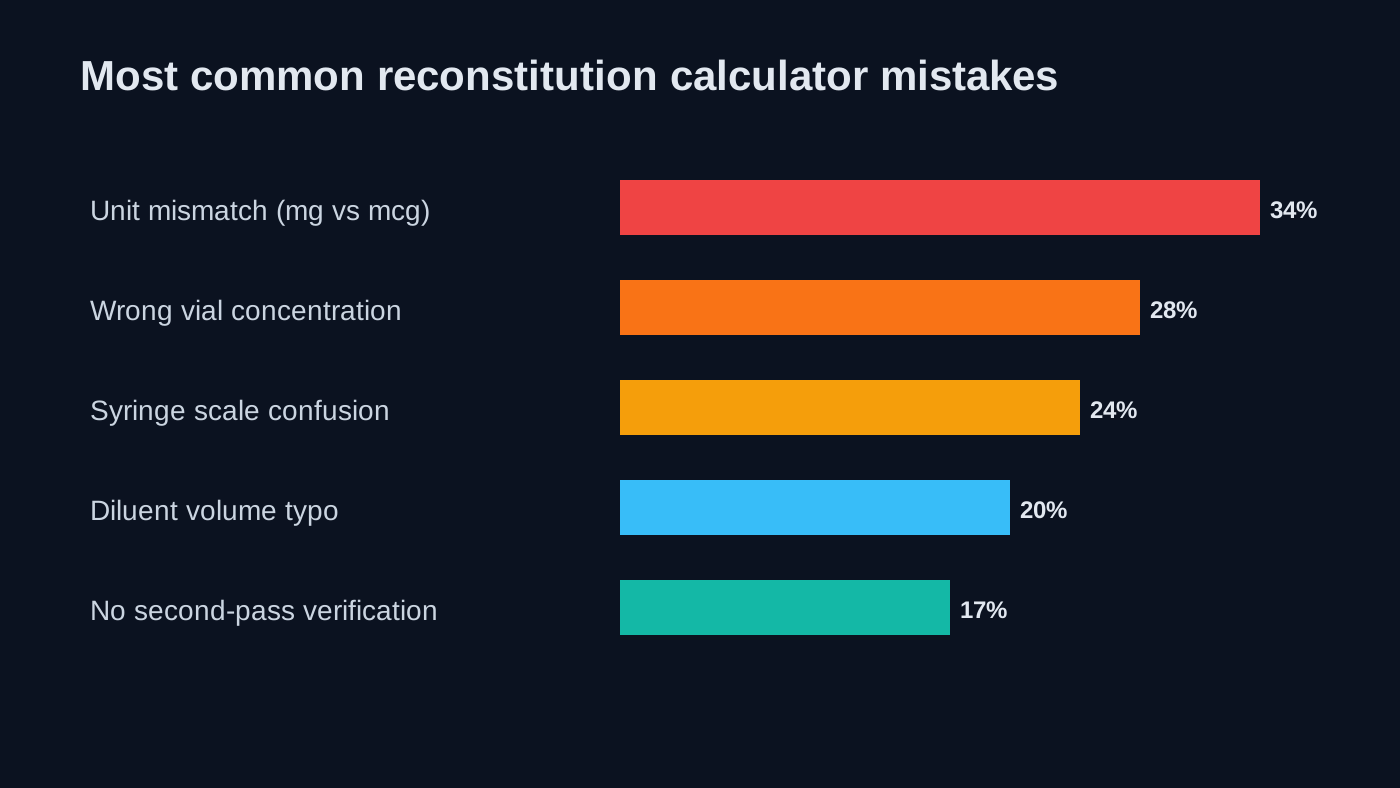
The chart highlights where extra attention should go during verification.
How to perform a second pass verification
After your first calculation, redo the same calculation with a different method.
Method one can be the calculator.
Method two can be manual concentration math on paper.
Both methods should converge to the same practical result. If they do not, pause and resolve the discrepancy before moving forward.
You can also ask a second reviewer to independently confirm the same inputs. Fresh eyes often catch mislabeled units and misplaced decimals.
Output interpretation without overconfidence
A correct output only means the arithmetic was correct for the given inputs. It does not mean the target decision is appropriate. Keep output interpretation separate from suitability assessment.
Suitability still depends on context. Review evidence quality in Learn and pre-flight risk controls in Blog before acting on any quantitative result.
Keep a lightweight audit trail
Save each calculation with date, inputs, outputs, and notes. A screenshot plus one sentence is enough.
This record helps with later review and reduces memory based errors. It also improves communication when discussing calculations with licensed professionals.
Red flags that require immediate pause
- Input units are not explicitly written
- Vial label and source documentation conflict
- Output changes dramatically after a small edit
- A second pass gives a materially different answer
- You cannot explain each input in plain language
Any one of these should trigger a pause and recheck.
Practical worksheet example
Use this structure each time.
Vial amount recorded as 10 mg.
Diluent volume recorded as 2.0 mL.
Target dose recorded as 250 mcg.
Expected calculator output recorded in units and volume.
Second pass result recorded and compared.
If the two outputs match within rounding tolerance, the arithmetic step is complete.
Final checklist before relying on output
- Label amount and units verified
- Final diluent volume verified
- Target dose written in explicit units
- Calculator result checked by second method
- Screenshot and notes saved for traceability
The calculator becomes much more reliable when wrapped in this process. Precision comes from arithmetic plus verification, not arithmetic alone.
References
- FDA (A)
- NLM MedlinePlus (A)
Affiliate Disclosure
Some links may become affiliate links. We separate editorial standards from commercial relationships and keep recommendations evidence-led.