Research Team
What to check before starting any peptide plan
Mar 19, 2026

Most avoidable peptide mistakes happen before day one. This pre-flight checklist shows how to verify source quality, set baseline data, and define conservative stop rules before any protocol discussion.
Why this checklist exists
Most preventable mistakes happen before the first dose is discussed. The common pattern is simple. A person reads a persuasive claim, skips source checks, skips baseline context, and moves straight to implementation details. That sequence creates avoidable risk because there is no foundation for interpretation when something changes.
This page gives a pre-flight structure that keeps decisions grounded. It does not replace clinical care. It does reduce the chance of poor assumptions and rushed decisions. If you only remember one idea, remember this. Good outcomes usually start with better preparation, not with more aggressive intervention.
Step one confirm identity and handling details
Start with identity. Confirm the exact compound name, concentration label, lot information, and storage instructions. If one source lists 5 milligrams per vial and another source claims 10 milligrams for the same product code, pause and resolve the discrepancy before going further.
Next confirm handling requirements. For many compounds, storage temperature and light exposure matter. Handling mistakes can degrade product quality and make interpretation difficult later. A person may think a protocol failed when the issue was actually improper handling from the start.
Check whether source documentation is current, complete, and specific. Broad claims like third party tested are not enough on their own. You need the actual report details and the ability to connect them to the product batch you received. If documentation cannot be tied to your batch, confidence should stay low.
Step two define baseline context before changes
Baseline context helps you separate real change from noise. Without baseline data, almost every later signal becomes ambiguous. A bad sleep week, a hard training block, or nutrition changes can all look like protocol effects when they are not.
Build a one week baseline snapshot at minimum. Track morning energy, sleep duration, sleep quality, resting heart rate, training load, body mass trend, and notable symptoms. Keep the format simple enough to complete daily. Consistency matters more than complexity.
If clinical labs are available through licensed care, review them before making decisions. The point is not to chase every marker. The point is to avoid blind spots and to understand whether there are existing issues that should be addressed first.
Step three set objective monitoring cadence
Monitoring should be defined before any changes occur. If monitoring is invented in the middle of uncertainty, interpretation quality drops quickly. Build a weekly review process that compares baseline values with current observations.
Use both objective and subjective markers. Objective markers may include body mass trend, training performance markers, and routine labs when appropriate. Subjective markers include appetite shifts, sleep quality, mood, headaches, injection site reactions, and recovery quality.
A practical rule is to keep the number of tracked metrics small. Six to ten meaningful indicators are easier to maintain than a large list that gets abandoned after ten days.
Step four define stop rules in advance
A stop rule is a pre-committed decision point. It prevents emotional decision making when pressure is high. Stop rules should be simple, visible, and non negotiable.
Examples include persistent adverse effects that do not settle, meaningful disruption in sleep over multiple nights, or unexpected symptoms that require evaluation. Your exact criteria depend on context, but the principle is constant. Decide before uncertainty appears.
A second rule is escalation clarity. Know who you contact, what symptoms trigger escalation, and how quickly you escalate. Waiting for certainty can delay necessary care.
Step five review evidence quality not just claim volume
Many pages online look convincing because they include technical language, not because they include high quality evidence. Separate mechanism narratives from outcome data. A plausible pathway does not guarantee a practical outcome in a real population.
Start with PubMed and ClinicalTrials.gov to identify the highest signal sources. Then evaluate study design, sample size, endpoints, and follow up duration. Ask whether reported outcomes are clinically meaningful or only surrogate markers.
If a claim is repeated widely but points to weak or circular citations, confidence should remain low. Repetition is not validation.
Step six build an interaction and confounder map
Peptide related decisions rarely occur in isolation. Training intensity, sleep debt, caloric changes, supplements, and medications can all influence interpretation. A confounder map reduces false conclusions.
Create a simple table with two columns. In the first column list current variables that can affect outcomes. In the second column list how stable each variable is this month. If several major variables are changing at once, interpretation confidence is low by default.
This approach helps prevent over attribution. Not every change is caused by the newest variable.
Step seven prepare documentation that is useful later
Good notes are short, clear, and searchable. Record dates, context, and what changed. Use plain language. If you log symptoms, include timing and severity. If you adjust inputs, write why the change was made.
Documenting decisions also improves communication with licensed professionals. It is easier to receive high quality guidance when history is organized and specific.
Visual scorecard for pre-flight readiness
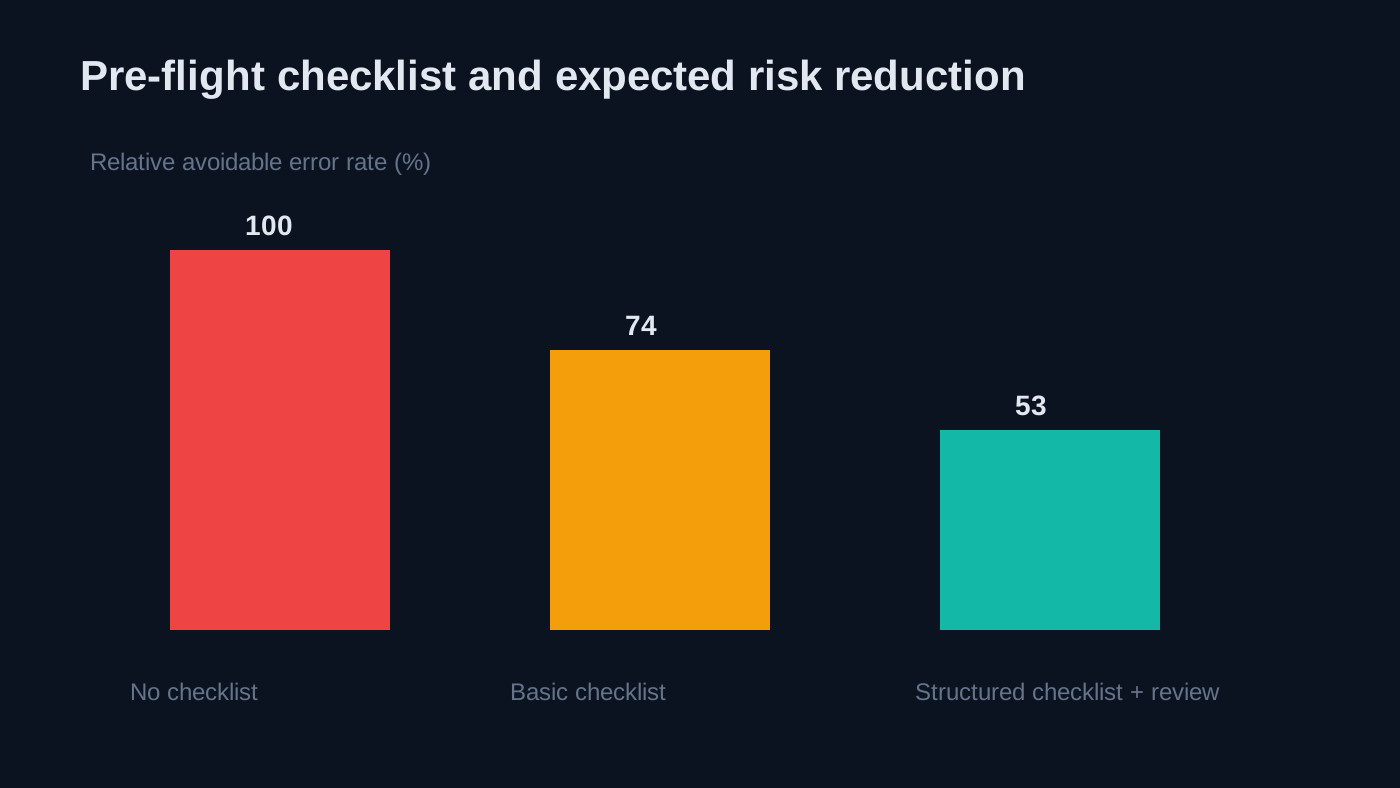
The scorecard is not a medical model. It is a decision hygiene tool. It shows a practical truth. Structured preparation lowers avoidable mistakes.
Common failures and how to avoid them
The first failure is rushing to implementation because a claim feels urgent. The fix is a mandatory checklist pause. No checklist completion means no progression.
The second failure is poor unit handling and arithmetic errors. Use a calculator tool and a second pass verification process before acting on numeric outputs. The companion guide in Tools shows a practical audit method.
The third failure is weak evidence interpretation. Use an explicit hierarchy and confidence language. The fundamentals guide in Learn explains how to read claims without overreach.
Final pre-flight checklist
- Confirm product identity and concentration labels
- Verify source documentation can be tied to the correct batch
- Capture one week baseline context for symptoms and performance
- Define objective monitoring cadence and review day
- Define conservative stop rules and escalation contacts
- Map confounders so interpretation remains grounded
- Keep decision notes concise and dated
A checklist does not guarantee outcomes. It does improve the quality of decisions made under uncertainty. That improvement is often the difference between a calm, informed process and a reactive one.
References
Affiliate Disclosure
Some links may become affiliate links. We separate editorial standards from commercial relationships and keep recommendations evidence-led.